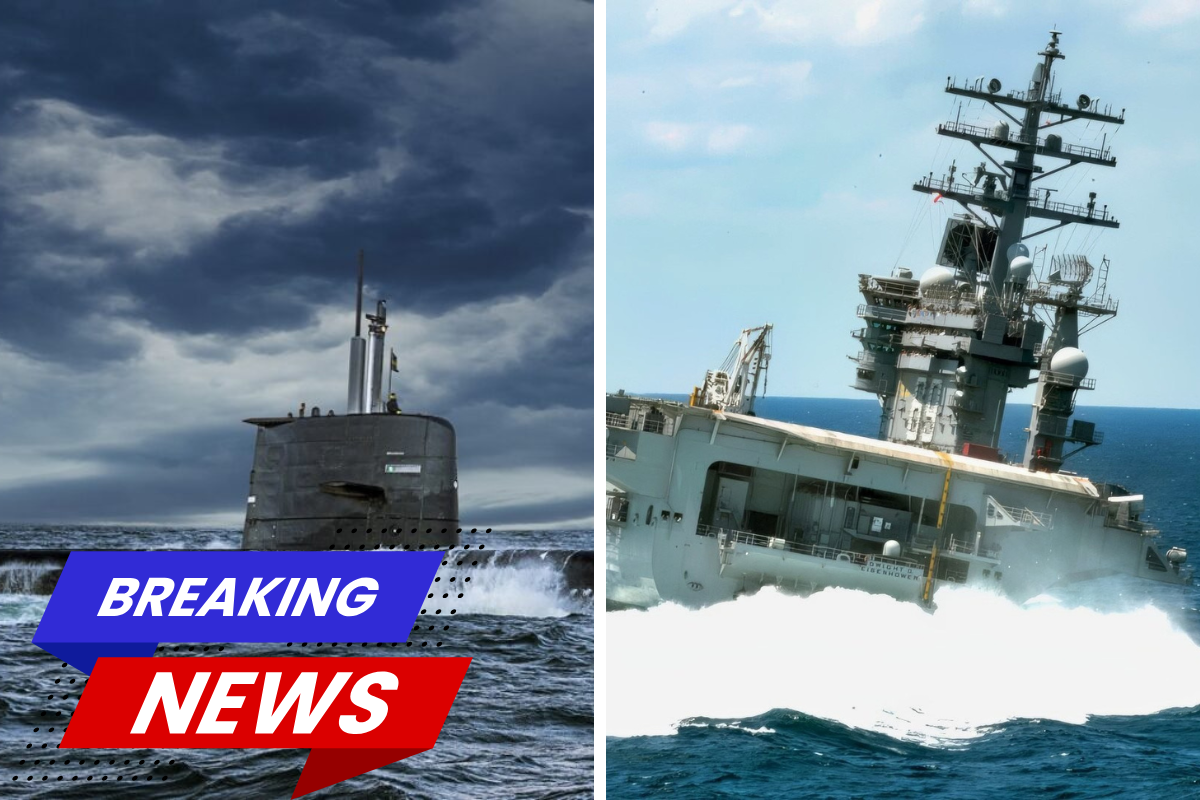
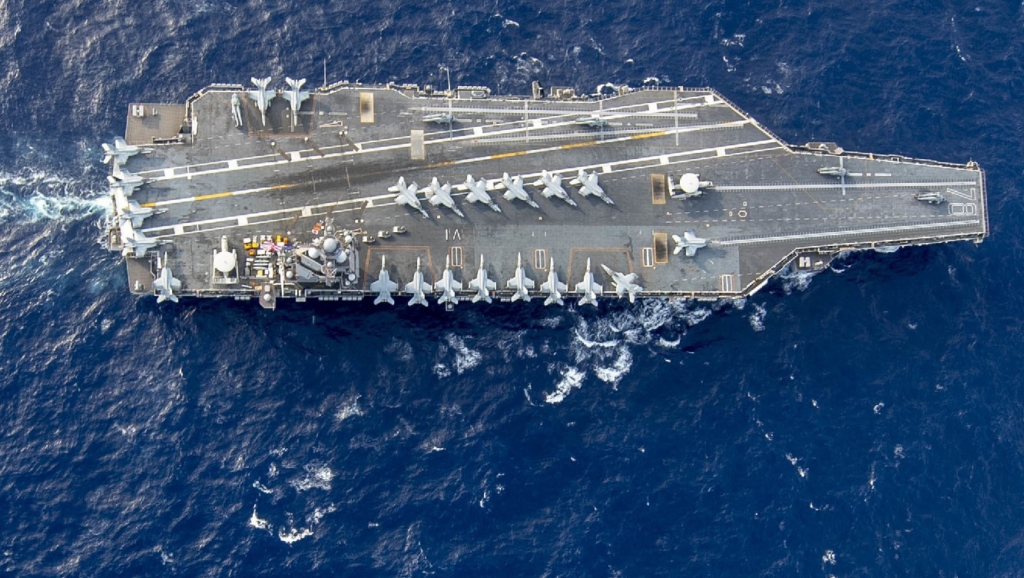
In the mythology of American power, few images loom larger than an aircraft carrier cutting through open water. Steel city. Floating airbase. A symbol that says the U.S. has arrived. For decades, the assumption was simple: you might bloody a carrier, you might scare it off, but actually sinking one? That bordered on fantasy. Until a quiet Swedish submarine showed up in 2005 and politely wrecked that belief.
During a Pacific war game that year, the USS Ronald Reagan—then one of the Navy’s newest crown jewels—was repeatedly “killed” in simulations. No hypersonic missiles. No massed enemy fleet. Just a single diesel-electric submarine, HSwMS Gotland, slipping through layers of escorts and sensors like it owned the place. The carrier never knew it was under threat. By the time the periscope photos were taken, the fight was already over.
The exercise that rattled the Pentagon
The 2005 exercise was meant to validate the Carrier Strike Group concept: overlapping rings of protection made up of Aegis destroyers, cruisers, ASW helicopters, and U.S. nuclear attack submarines. It’s a system refined over decades, backed by enormous budgets and cutting-edge sensors.
Gotland was playing the enemy. On paper, it didn’t look scary. Roughly 200 feet long. Diesel-electric. Costing around $100 million—a rounding error compared to a $6 billion carrier. But in practice, it was a nightmare.
Over multiple runs, the Swedish boat penetrated the carrier’s defenses and simulated torpedo attacks. Again and again. Each time, it escaped undetected. The crew followed exercise protocol, snapping periscope photos of the Reagan’s hull to prove the kill. Those images circulated quietly inside Navy circles, and they landed like a gut punch.
This wasn’t about poor seamanship or a fluke scenario. It exposed a structural vulnerability. The Navy’s anti-submarine warfare playbook had evolved around chasing loud, fast, nuclear submarines—not something that could all but disappear into ocean background noise.
Why air-independent propulsion changed the game
To understand how Gotland pulled this off, you have to look at the weak point of traditional diesel submarines: air. Conventional subs rely on diesel engines on the surface and batteries underwater. Once the batteries run low, the boat has to snorkel—raise a mast, run engines, recharge. That’s when it’s loud. That’s when radar and sonar can find it.
Air-independent propulsion, or AIP, breaks that cycle.
Gotland was the first submarine designed from the keel up around an AIP system. Its Stirling engines use external combustion, powered by liquid oxygen and diesel fuel, to generate electricity without needing outside air. No snorkeling. No engine roar. Minimal vibration.
The result is endurance measured in weeks, not days, and a noise profile so low that, at slow speeds, it blends into the ocean itself. Nuclear submarines have unlimited range, but their reactors still need coolant pumps. That creates a constant acoustic signature. An AIP boat, creeping along or sitting still on the seabed, can be almost impossible to hear.
That was the blind spot. And Gotland exploited it ruthlessly.
“Killed” by a ghost
Inside the exercise, the Gotland’s success bordered on surreal. It slipped past surface escorts. It evaded helicopter-dropped sonar buoys. It got inside the inner defensive ring—the zone that’s supposed to be sterile, safe, untouchable.
From there, it had options. Line up a shot. Back off. Come around again. The carrier strike group never achieved a firm track.
By the end of the war game, the conclusion was unavoidable: a single, ultra-quiet submarine had neutralized the most powerful symbol of U.S. naval dominance. According to Navy officials speaking later, the results forced a serious rethink of how the fleet trained and how it measured undersea threats.
The seriousness of that rethink showed up in what happened next. The U.S. Navy didn’t just analyze Gotland. It leased it.
From 2005 to 2007, the Swedish submarine and its crew operated out of San Diego, serving as a live adversary so American sailors could learn—painfully—what it’s like to hunt a true AIP boat. That decision alone said everything. You don’t lease your embarrassment unless you’re worried it represents the future.
Details about U.S. submarine training and ASW doctrine are outlined publicly by the U.S. Navy at https://www.navy.mil and the Department of Defense at https://www.defense.gov.
AIP goes global, and the problem gets bigger
If Gotland had remained a quirky Scandinavian outlier, this might be a historical anecdote. Instead, AIP spread fast.
Germany refined fuel-cell systems. France developed its own variants. Japan, South Korea, and others followed. Today, a modern conventional submarine without AIP is the exception, not the rule.
The most consequential adopter is China.
The People’s Liberation Army Navy has built large numbers of Yuan-class submarines equipped with AIP. These boats are optimized for coastal and regional waters—exactly where the U.S. would need to operate in a Taiwan contingency. Quiet, patient, and numerous, they fit neatly into China’s broader anti-access/area-denial strategy.
The idea is layered pressure. Long-range anti-ship ballistic missiles push carriers farther out. AIP submarines lurk in chokepoints, straits, and shallow seas. If a carrier strike group pushes in, it does so knowing the water may already be occupied by something it can’t hear.
Public assessments of Chinese naval expansion are regularly published by the Office of Naval Intelligence and the Congressional Research Service, including summaries available via https://www.oni.navy.mil and https://crsreports.congress.gov.
Silence versus scale
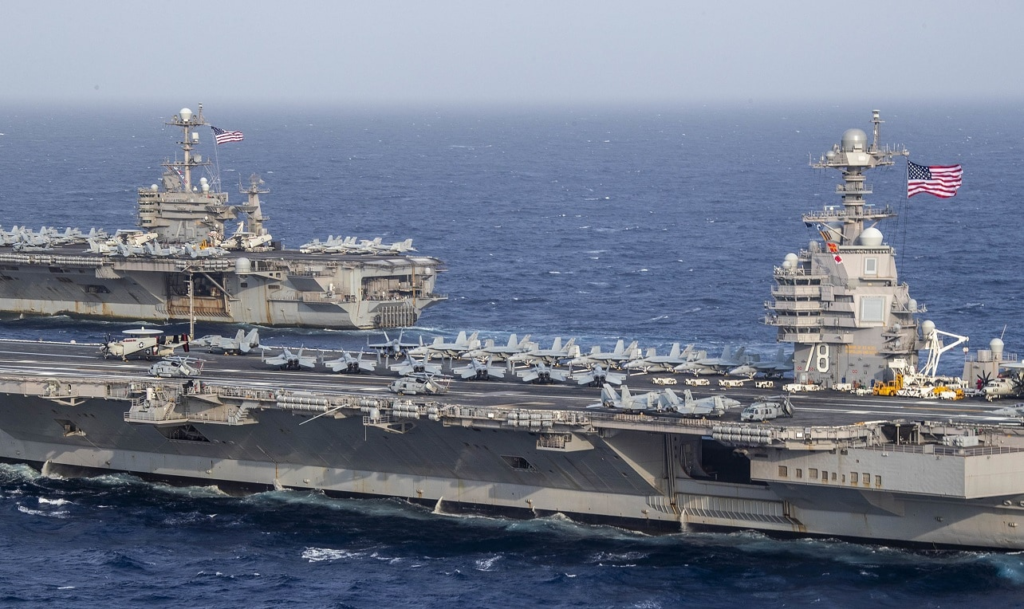
Aircraft carriers still matter. Immensely. They project airpower, logistics, and political presence in ways nothing else can. But the Gotland episode stripped away the illusion of invulnerability.
In modern anti-submarine warfare, scale doesn’t automatically win. Sensors help. Numbers help. But silence—true, persistent quiet—can beat them both.
That’s the enduring lesson of 2005. A small, relatively cheap platform forced the world’s most powerful navy to adapt. It reminded planners that the ocean is a three-dimensional battlespace where physics, not prestige, decides outcomes.
The carrier isn’t obsolete. But it’s no longer untouchable. And somewhere below the surface, moving slowly, saying nothing at all, that reality is still waiting.
FAQs
Q. Was the USS Ronald Reagan actually sunk?
No. The events occurred during a training exercise with simulated attacks, not real combat.
Q. Why was the Gotland so hard to detect?
Its air-independent propulsion system allowed it to remain submerged for weeks with an extremely low acoustic signature.
Q. Did the U.S. Navy change its doctrine after this?
Yes. The Navy adjusted training and ASW focus, including leasing Gotland to train against AIP submarines directly.
Q. Are aircraft carriers now obsolete?
No, but they face more credible undersea threats than in the past, especially near contested coastlines.
Q. Which countries operate AIP submarines today?
Germany, France, Japan, South Korea, Sweden, and China, among others.