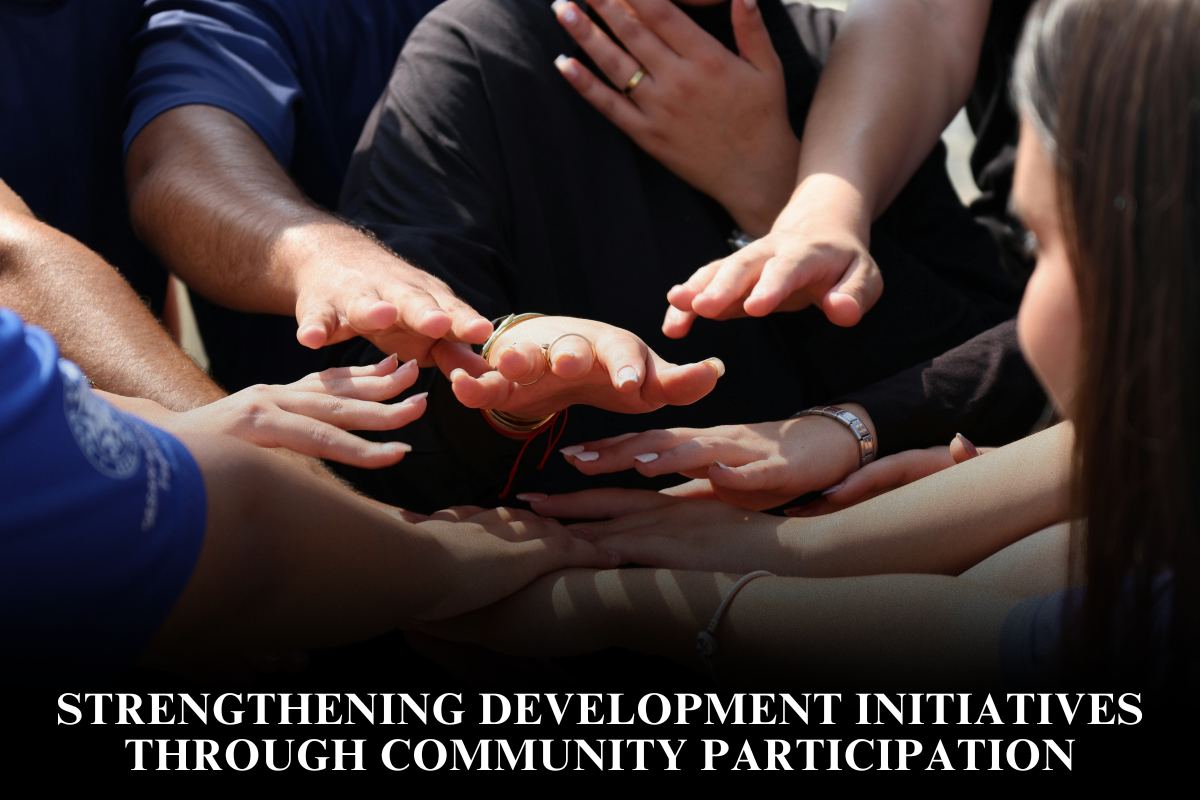
Development at its core must be people-centered. While governments and organizations initiate projects to address pressing issues in education, healthcare, infrastructure, and sustainable livelihoods, the true measure of success often lies in the degree of community participation. When people become active stakeholders rather than passive recipients, development becomes more sustainable, inclusive, and impactful.
The Meaning and Importance of Community Participation
Community participation refers to the active engagement of individuals and groups in planning, implementing, and evaluating development programs that affect their lives. It ensures that projects align with real community needs and values rather than external assumptions.
The significance of participation extends beyond consultation—it creates ownership. When communities take part in decision-making, they feel responsible for maintaining and continuing development efforts. This grassroots involvement enhances trust between citizens, local authorities, and implementing agencies, ensuring that progress is both effective and enduring.
Building Local Ownership and Empowerment
Ownership is the foundation of sustainable development. When a community collectively contributes its time, knowledge, and resources, it develops a sense of pride and responsibility toward outcomes. Empowering communities begins with capacity building: enhancing local knowledge, leadership abilities, and problem-solving skills.
For instance, in rural water management initiatives, training villagers to maintain wells or water filtration systems prevents dependency on external technicians. Similarly, involving women’s self-help groups in microfinance or agricultural co-operatives improves financial literacy and gender equity while strengthening local economies.
Empowerment also changes social dynamics. It encourages marginalized groups—women, youth, minorities—to voice their opinions and participate in decision-making, thus creating a more equitable social structure.
Participatory Planning and Decision-Making
Top-down planning often fails because it overlooks ground realities. Participatory planning corrects this imbalance by incorporating community knowledge, priorities, and cultural practices into project design.
Tools like Participatory Rural Appraisal (PRA), focus group discussions, and social mapping foster dialogue between planners and residents. These approaches ensure that interventions address local needs—for example, building a health center in a frequently flood-affected area is more effective when communities identify the best location and accessibility routes.
Decision-making should not end with project approval. Regular community meetings and feedback mechanisms ensure that implementation stays transparent, accountable, and adaptable to changing circumstances.
Partnerships Between Communities and Institutions
Effective development requires collaboration between local communities, government bodies, NGOs, and private institutions. Each has unique strengths:
- Communities offer contextual knowledge, labor, and commitment.
- Governments provide policy frameworks, technical support, and funding.
- NGOs contribute facilitation skills and innovation.
- Private enterprises add efficiency, technology, and resources.
When these stakeholders work together under shared objectives, the chances of success multiply. For example, community-driven sanitation programs supported by local governments and civil society have significantly improved hygiene standards in rural areas of India, Bangladesh, and Kenya.
Challenges in Ensuring Genuine Participation
Despite clear benefits, community participation faces several challenges:
- Power Imbalances: Dominant community members may overshadow marginalized voices.
- Lack of Capacity: Limited education, awareness, or training can restrict people’s ability to contribute effectively.
- Tokenism: Sometimes participation is symbolic—people are informed but not truly involved.
- Resource Limitations: Financial and logistical constraints can make it difficult to maintain consistent engagement.
Addressing these challenges requires consistent facilitation, periodic capacity building, and the inclusion of local leaders who genuinely represent their communities.
Tools for Strengthening Participation
Several strategies can enhance community engagement:
- Capacity Building Workshops: Teach technical, managerial, and leadership skills.
- Community Forums: Create open spaces for discussion and feedback.
- Participatory Monitoring: Let communities track progress using locally defined indicators.
- Social Accountability Mechanisms: Encourage transparency through public audits and citizen scorecards.
- Integration of Indigenous Knowledge: Respect and include traditional methods and wisdom in project planning.
These tools encourage self-reliance, community trust, and long-term cooperation.
The Transformative Impact of Community Participation
When communities drive development, the results extend far beyond infrastructure or income. Participation fosters civic responsibility, local innovation, and resilience. It builds networks of mutual support that can respond quickly during crises—natural disasters, public health emergencies, or economic downturns.
Ultimately, community participation transforms development from being a government-driven process to a people-driven movement. It turns beneficiaries into partners and projects into long-lasting institutions of change.
Strong community participation is not just an approach but a philosophy of development. It acknowledges that the people affected by change must shape that change themselves. Strengthening development initiatives through community involvement ensures relevance, equity, and sustainability. Governments and organizations must therefore focus on empowering communities not as beneficiaries but as co-creators of their own future.
Frequently Asked Questions (FAQs)
1. What are some examples of successful community participation initiatives?
Examples include India’s National Rural Health Mission involving village health committees, Kenya’s Community Development Trust Fund supporting local projects, and Nepal’s Community Forestry Program, where local users manage forest resources sustainably. Each shows how shared responsibility enhances long-term outcomes.
2. How can community participation improve project sustainability?
When communities contribute their knowledge and labor, they develop ownership and accountability. This ensures that infrastructure and services—like schools, water supply systems, or cooperatives—are maintained even after external agencies withdraw.
3. What role do local leaders play in participatory development?
Local leaders often bridge the gap between communities and implementing agencies. They mobilize participation, represent concerns, and foster collaboration. However, it’s vital to ensure that leadership is inclusive and representative, not limited to elite groups.
4. How can digital tools support community participation today?
Digital platforms such as mobile surveys, WhatsApp groups, or participatory GIS mapping allow real-time feedback and wider engagement. They help remote communities connect with policymakers, monitor project progress, and exchange good practices efficiently.
5. What are the key principles for effective community engagement?
Transparency, inclusiveness, respect for local knowledge, shared decision-making, and continuous capacity building are core principles. Above all, participation must be meaningful—ensuring that communities have real influence over outcomes.