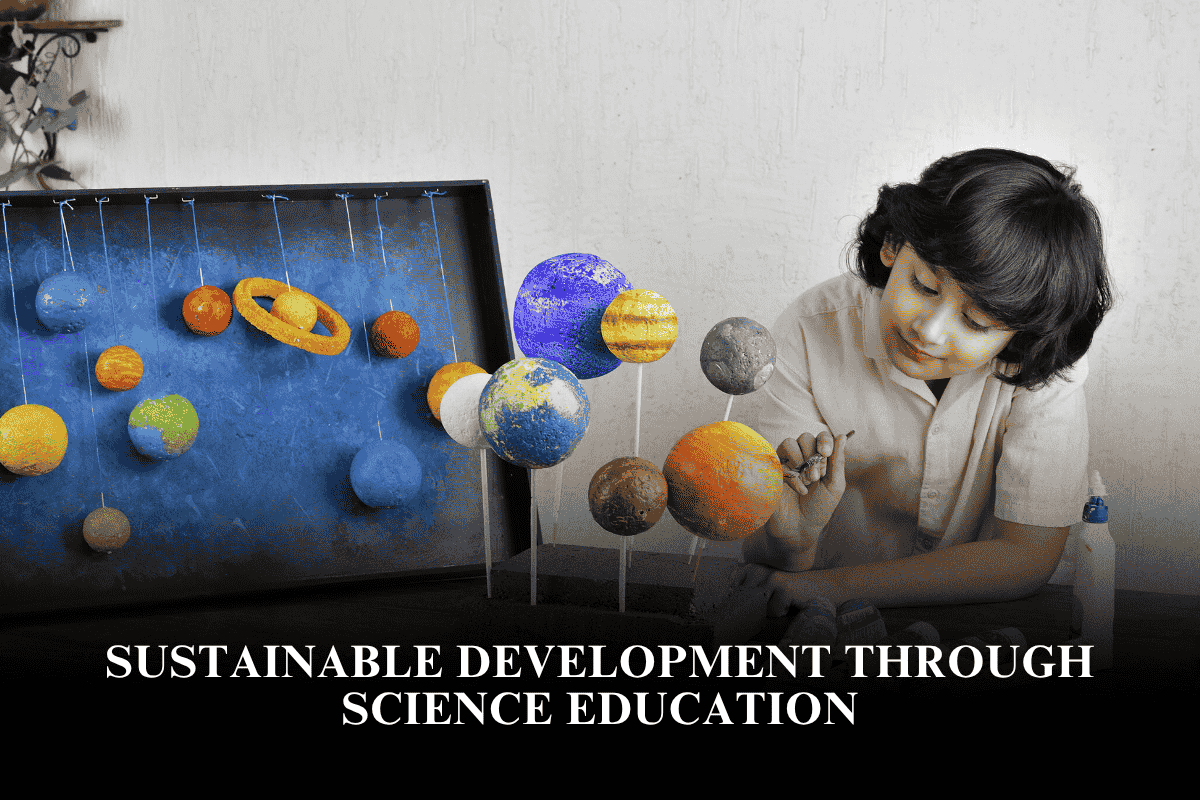
Science education is a foundational pillar for sustainable development, equipping individuals with the knowledge, skills, and attitudes necessary to understand and address complex environmental, social, and economic challenges. It fosters critical thinking, scientific temper, and responsible citizenship, enabling societies to pursue development that meets present needs without compromising future generations.
Importance of Science Education for Sustainable Development
Scientific literacy empowers learners to make informed decisions, innovate sustainable solutions, and participate actively in policy and community initiatives. Integrating sustainability concepts in science curricula nurtures awareness of human impacts on ecosystems and promotes ethical stewardship of natural resources.
Key Contributions of Science Education to Sustainability
1. Raising Environmental Awareness
Education highlights issues such as climate change, biodiversity loss, pollution, and resource depletion, motivating protective actions.
2. Promoting Sustainable Technologies
Teaching renewable energy, waste management, water conservation, and sustainable agriculture prepares students to develop and adopt eco-friendly technologies.
3. Cultivating Critical Thinking and Problem Solving
Inquiry-based science education encourages question-driven learning, enabling students to analyze complex problems and devise innovative strategies for sustainability.
4. Encouraging Social and Ethical Responsibility
Science education fosters values of equity, interdependence, and respect for nature, essential for collective sustainable actions.
5. Supporting Policy and Community Engagement
Educated citizens are better equipped to engage in democratic processes, advocacy, and community-based sustainability projects.
Strategies to Integrate Sustainability in Science Education
- Infuse sustainability themes and local relevance into curricula.
- Use experiential learning, projects, and field studies focusing on sustainability challenges.
- Train educators in sustainability pedagogy and interdisciplinary approaches.
- Foster partnerships with environmental organizations and industries for real-world learning.
- Leverage digital resources and community outreach for wider impact.
Benefits of Science Education for Sustainable Development
- Informed and empowered citizens capable of driving sustainability agendas.
- Innovation in sustainable technologies and practices.
- Enhanced resilience of communities to environmental and social changes.
- Conservation of natural resources ensuring long-term well-being.
- Promotion of global citizenship and cross-cultural collaboration for sustainability.
FAQs
What is the link between science education and sustainable development?
Science education provides knowledge and skills essential to understand and solve sustainability challenges.
How does science education raise environmental awareness?
By teaching ecological principles, human impacts, and conservation strategies.
What skills does it develop for sustainability?
Critical thinking, problem-solving, ethical reasoning, and innovation.
How can sustainability be integrated into science curricula?
Through thematic content, project-based learning, and interdisciplinary approaches.