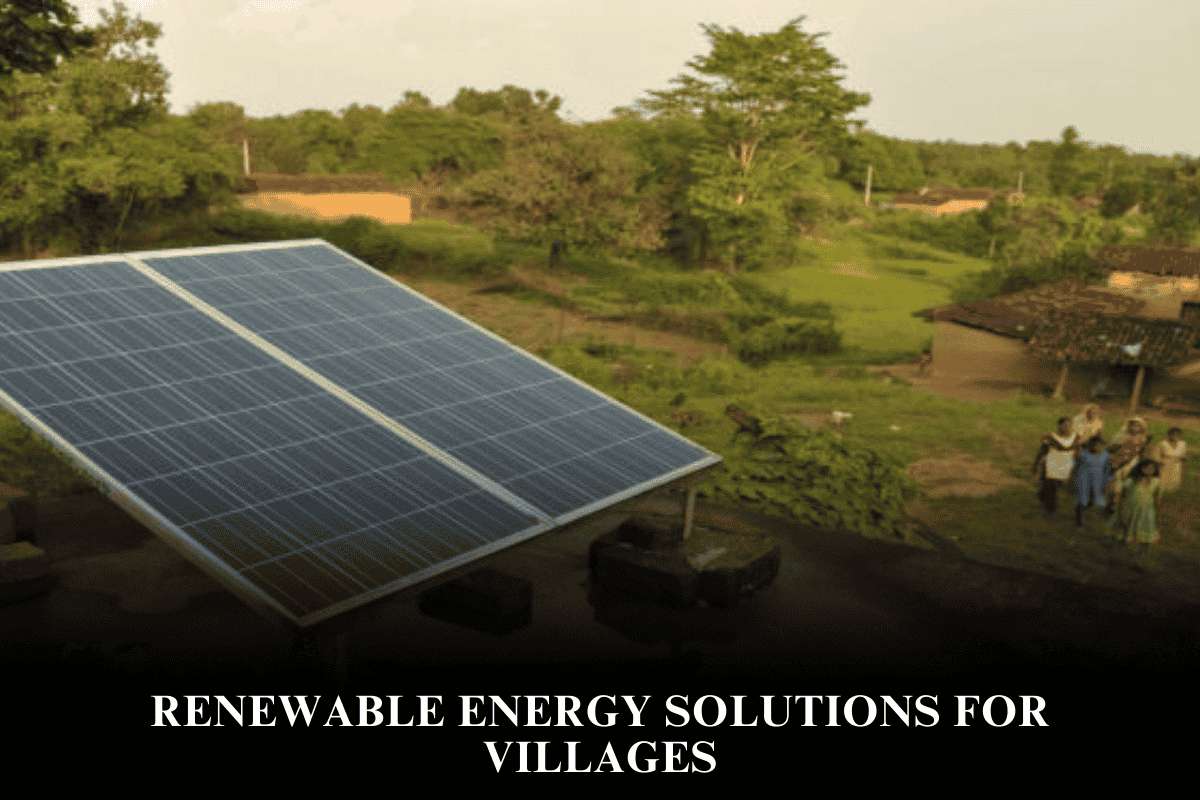
Implementing renewable energy solutions in villages offers sustainable, eco-friendly, and cost-effective power options. These initiatives help improve quality of life, reduce dependence on fossil fuels, and promote environmental conservation.
Key Renewable Energy Solutions for Villages
- Solar Power:
Utilizing solar panels on rooftops or solar farms provides a reliable source of electricity, especially in sunny regions. Solar lanterns and solar-powered appliances are ideal for lighting and small-scale energy needs. - Biogas:
Organic waste like animal manure and crop residues are processed in biogas plants to produce clean cooking fuel and organic fertilizer. Biogas reduces indoor air pollution and supports sustainable agriculture. - Small-Scale Wind Energy:
In areas with consistent wind speeds, small wind turbines can generate electricity for homes, schools, and community centers. Wind energy is often supplementary to solar in hybrid systems. - Micro-Hydro Power:
For villages near flowing water bodies, micro-hydro turbines harness kinetic energy for local electricity needs, minimal environmental impact, and low operating costs. - Hybrid Systems:
Combining solar, wind, and biogas ensures steady power supply, especially in remote locations with variable weather conditions.
Benefits of Renewable Energy in Villages
- Cost Savings:
Reduces fuel expenses and electricity costs over time, with some systems (like solar) requiring minimal maintenance. - Environmental Conservation:
Decreases greenhouse gas emissions, rural air pollution, and ecological footprint. - Energy Independence:
Empowers villages to generate their own energy, promoting resilience during grid failures and reducing reliance on expensive fuel imports. - Socioeconomic Development:
Reliable power supports education (better lighting), healthcare (medical equipment), and small businesses (cold storage and machinery).
FAQ: Renewable Energy for Villages
Q: Are renewable energy solutions affordable for villages?
A: Yes, costs are decreasing, and government subsidies or grants often make installations affordable.
Q: How much maintenance do these systems require?
A: Solar panels need minimal maintenance, while biogas and micro-hydro systems may require periodic checks and servicing.
Q: Can renewable energy completely replace grid power in remote villages?
A: In many cases, yes, especially with hybrid setups, but integration with existing grids varies based on infrastructure.