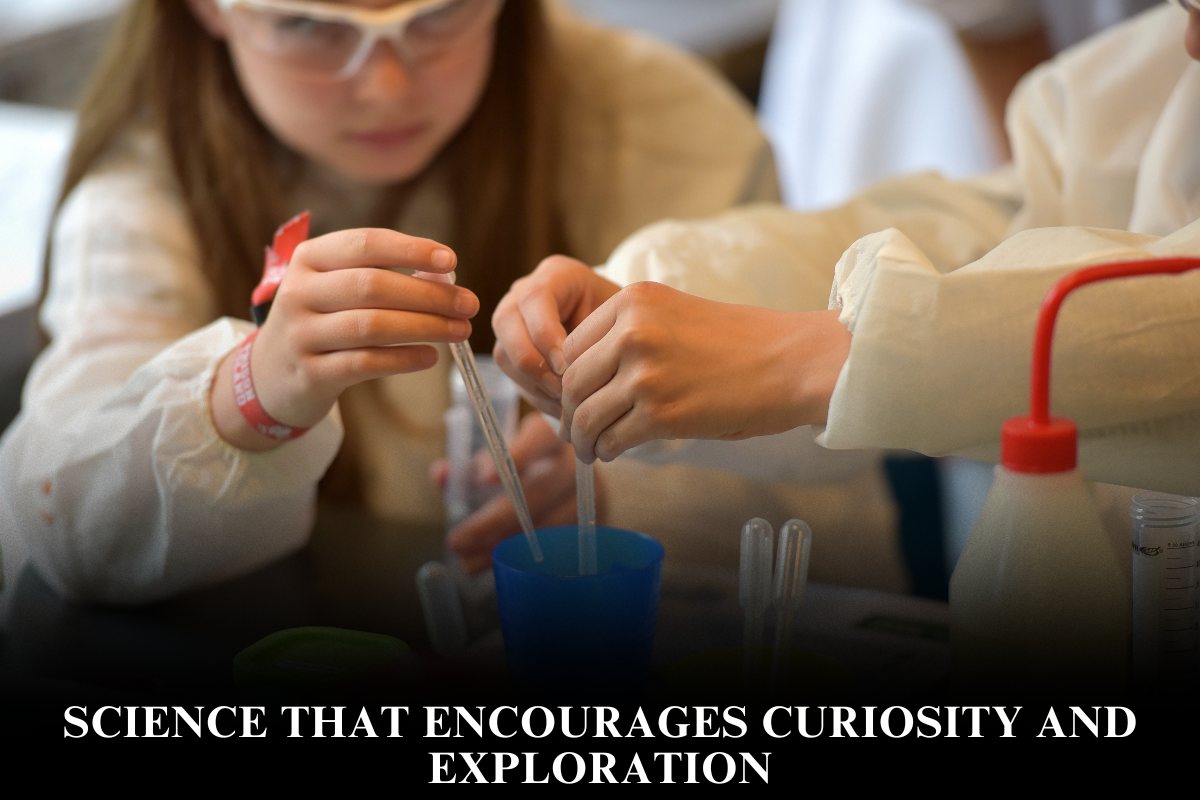
Hands-on experiments transform abstract scientific ideas into tangible discoveries, aligning with U.S. Next Generation Science Standards (NGSS) that emphasize doing science through inquiry.
These activities encourage students from elementary to middle school to observe, predict, analyze data, and draw conclusions using everyday materials. In American classrooms, such experiments foster critical thinking and align with NGSS practices like planning investigations and using models.
Benefits of Hands-On Learning
Practical experiments make science accessible and exciting, helping students connect classroom concepts to real-world phenomena. NGSS prioritizes three dimensions—disciplinary core ideas, science practices, and crosscutting concepts—ensuring experiments build skills like data analysis and evidence-based explanations. Studies show these activities improve retention, with students 95% more likely to remember concepts through active participation compared to lectures.
Educators in 20 NGSS-adopting states, including California and Illinois, use them to meet standards for physical, life, earth sciences, and engineering design. They also promote equity by using household items, reducing barriers for diverse learners.
Classic Chemistry Experiments
Baking soda and vinegar volcanoes demonstrate chemical reactions and gas production, a staple in U.S. elementary curricula. Mix baking soda in a bottle with dish soap and food coloring, then add vinegar to create a fizzy eruption—students measure foam height to quantify acid-base reactions, aligning with NGSS MS-PS1-2 on chemical properties.
Red cabbage pH indicators reveal acids and bases using everyday kitchen items. Boil chopped cabbage, strain the liquid, and test household substances like lemon juice (pink, acidic) or soap (green, basic); this teaches matter conservation and supports NGSS 5-PS1-3 on mixtures.
Physics in Motion
Balloon-powered cars explore Newton’s laws of motion with straws, bottle caps, and tape. Inflate a balloon attached to a cardboard chassis; release to propel the car, varying balloon size to test force and friction—perfect for NGSS MS-PS2-1 and MS-PS2-2 on pushes, pulls, and balanced forces.
Crushed can experiments show air pressure: Heat water in an aluminum can, invert over cold water, and watch it collapse dramatically. This illustrates gas behavior under temperature changes, tying to NGSS HS-PS1-4 on thermal energy transfer.
Life and Earth Science Activities
Dancing raisins reveal density and buoyancy: Drop raisins into clear soda; carbon dioxide bubbles attach, lifting them before they sink. Students predict outcomes and graph observations, meeting NGSS 5-PS1-1 on matter properties.
Color-changing milk demonstrates surface tension with whole milk, food coloring drops, and dish soap on a plate. Soap breaks fat molecules, causing colors to swirl; this NGSS-aligned activity (MS-PS1-2) highlights molecular interactions.
Grow sugar crystals on strings in saturated solutions to study evaporation and supersaturation. Over days, observe growth rates under different conditions, linking to NGSS MS-ESS2-4 on water cycles.
NGSS Alignment and Classroom Tips
All listed experiments follow NGSS engineering practices, like iterative testing (MS-ETS1-4). Khan Academy and ACS provide free guides with student worksheets for seamless integration. Safety first: Supervise, use gloves for chemicals, and adapt for grades—elementary focuses on observation, middle school on data modeling.
Parents and teachers track progress via science fair projects, common in U.S. schools, where these build portfolios. Resources like Science Buddies offer extensions for deeper inquiry.
Frequently Asked Questions (FAQs)
1. What materials are needed for most NGSS-aligned experiments?
Household items like baking soda, vinegar, food coloring, balloons, and recyclables suffice, making them budget-friendly for U.S. classrooms and homes.
2. How do these experiments fit elementary standards?
They target grades 3-5 physical and earth science, emphasizing observation and variables per ACS and NGSS guidelines.
3. Are these safe for young children?
Yes, under adult supervision; avoid open flames and use small quantities—Vernier and Khan stress precautions.
4. Can middle schoolers extend these for science fairs?
Absolutely; add variables like temperature effects or data graphs to meet MS-ETS1-4 prototyping standards.
5. Where to find more free NGSS resources?
NextGenScience.org, Khan Academy, and ACS offer vetted lessons and units with rubrics for quality alignment.