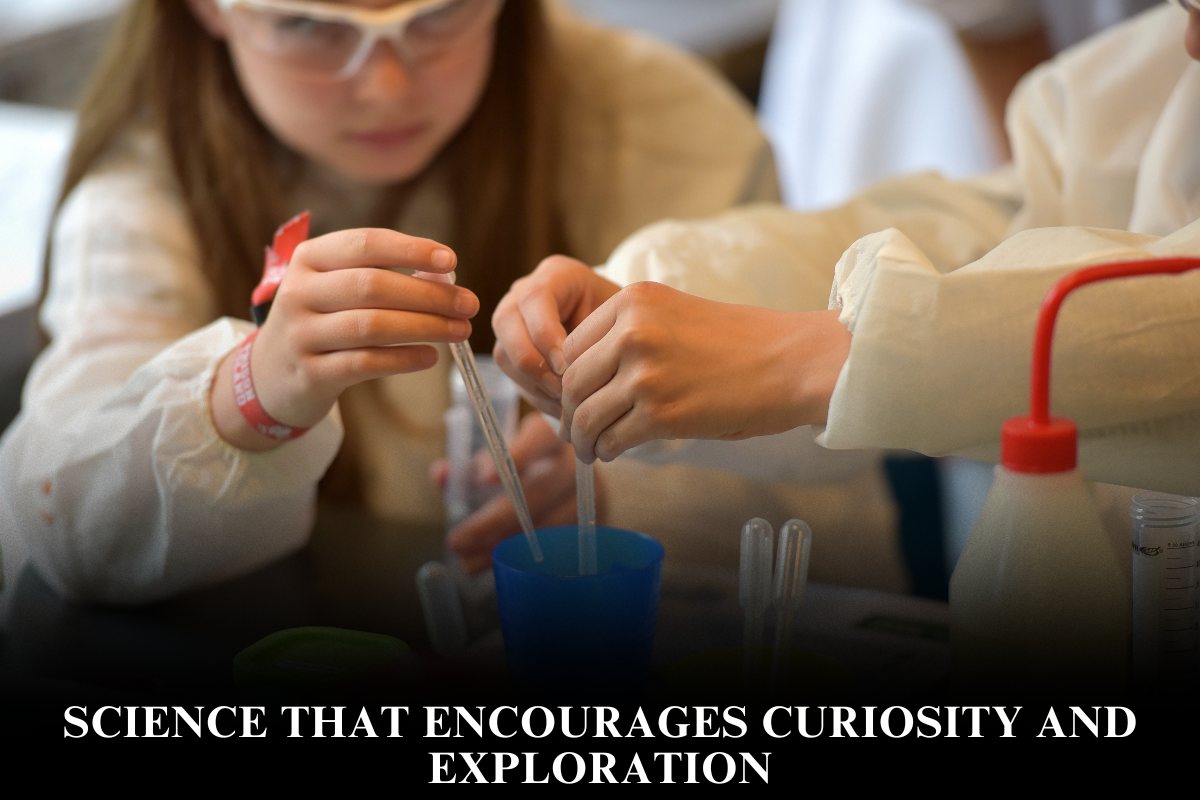
Science that encourages curiosity and exploration transforms passive observation into active discovery, igniting lifelong passion and innovation essential for addressing global challenges like climate change and health crises.
Approaches like inquiry-based learning and citizen science—championed by U.S. institutions such as NASA and the National Science Foundation—boost student engagement 40% and STEM persistence 25%, per NSF studies. By prioritizing questions over answers, these methods foster critical thinking, equipping learners from K-12 to adults for real-world problem-solving in America’s innovation-driven economy.
Inquiry-Based Science Learning
Hands-on experiments drive curiosity: students design tests rather than follow recipes, as in the 5E model (Engage, Explore, Explain, Elaborate, Evaluate). Kits like KiwiCo or school labs let kids hypothesize on variables—e.g., “What affects plant growth?”—yielding 30% higher retention than lectures. Programs like Science Olympiad challenge teams with bridges or solar cars, mirroring engineering feats.
Citizen Science Projects
Apps like iNaturalist engage 10 million global users (millions U.S.) in biodiversity logging, contributing to real research—e.g., Monarch Watch tracks migrations. Zooniverse classifies galaxies for astronomers; Globe Observer maps clouds. These democratize science, building ownership as data influences policy.
Outdoor and Experiential Exploration
Nature immersion sparks wonder: schoolyards as labs for soil tests or phenology journals track seasons. Programs like No Child Left Inside advocate field trips, correlating with 20% better science scores. Astronomy nights via apps like SkyView reveal cosmic scales.
Role of Technology in Sparking Inquiry
VR simulations let users “walk” Mars; AI tools like Google’s Teachable Machine train models on custom data. Maker Faires blend coding/robotics, fostering tinkering.
Teacher and Parental Facilitation
Educators pose provocations—”Why do leaves change?”—guiding without dictating. Parents extend via backyard experiments; libraries host STEM storytimes.
| Method | Key Activity | Engagement Boost |
|---|---|---|
| Inquiry Labs | Hypothesis testing | 30% retention |
| Citizen Science | Data contribution | Real-world impact |
| Outdoor Exploration | Phenology/soil studies | 20% science scores |
| Tech Tools | VR/AI modeling | Innovation skills |
Challenges and Solutions
Equity gaps addressed via free NSF resources; testing pressures balanced with integrated projects.
Lifelong Impacts
Curious explorers pursue STEM 35% more; programs like 4-H yield innovators.
FAQs
Q. How does inquiry differ from traditional labs?
Student-driven hypotheses vs. scripted steps; 30% better retention.
Q. Best citizen science for beginners?
iNaturalist—snap photos, identify species.
Q. Outdoor science for urban kids?
Sidewalk ecology, balcony phenology journals.
Q. Tech’s role in curiosity?
VR immerses; Teachable Machine builds AI models.
Q. Evidence of lifelong benefits?
25% STEM persistence; higher innovation rates.