In an era defined by information overload, science awareness is more essential than ever for making informed personal, civic, and global decisions. From evaluating health claims on social media to voting on environmental policies, the ability to recognize credible scientific information empowers citizens to shape responsible choices.
In the United States, where misinformation can spread faster than verified facts, promoting science literacy strengthens democracy, public safety, and long-term sustainability.
The Meaning of Science Awareness
Science awareness is more than memorizing facts — it’s understanding how scientific knowledge is produced, tested, and revised. It involves being able to question sources, evaluate evidence, and apply logic. This differs from “scientific literacy,” which emphasizes education; science awareness extends to attitude — curiosity, openness, and skepticism toward unverified claims.
Public surveys from the Pew Research Center (2024) show that nearly 75% of Americans agree science plays an important role in solving modern challenges, yet fewer than half feel confident explaining how research findings are tested and validated. Bridging this gap is crucial for personal empowerment and societal progress.
Why Science Awareness Matters
Across the U.S., people make science-based decisions daily: choosing vaccines for children, weighing electric vehicle adoption, or supporting local water treatment policies.
Without understanding how science works, misinformation can drive fear or mistrust. Consider the COVID-19 pandemic — individuals who understood the basics of viral transmission and vaccine development were more likely to protect themselves and others effectively.
Science awareness also influences consumption and sustainability. Simple awareness of energy efficiency, air quality, or climate impacts helps families curb waste and adopt greener habits. At societal scale, such literacy drives policy support for clean energy, biodiversity protection, and public health infrastructure — all pillars of national resilience.
Moreover, informed citizens serve as bridges between experts and the public, translating complex science into community change. Teachers, journalists, nurses, and parents with foundational science awareness become catalysts for responsible discussion and decision-making.
Key Barriers to Scientific Understanding
Despite widespread access to digital information, barriers to science awareness persist:
- Information overload: Competing headlines, AI-generated misinformation, and short attention spans hinder evaluation of credible sources.
- Educational inequality: Rural or underfunded communities often face limited access to quality STEM education and resources.
- Political and cultural mistrust: When science becomes politicized — for example, around vaccines, climate, or reproductive health — skepticism clouds objective reasoning.
- Media distortion: Oversimplified or sensational reporting can mislead public interpretation of research results.
A 2023 National Science Foundation survey found 38% of adults in the U.S. get most science news from social media, where context and peer review are often absent. Combating this requires an ecosystem approach: improving science education, strengthening public communication, and encouraging lifelong curiosity.
Strategies to Build Science Awareness
1. Strengthen Early Education
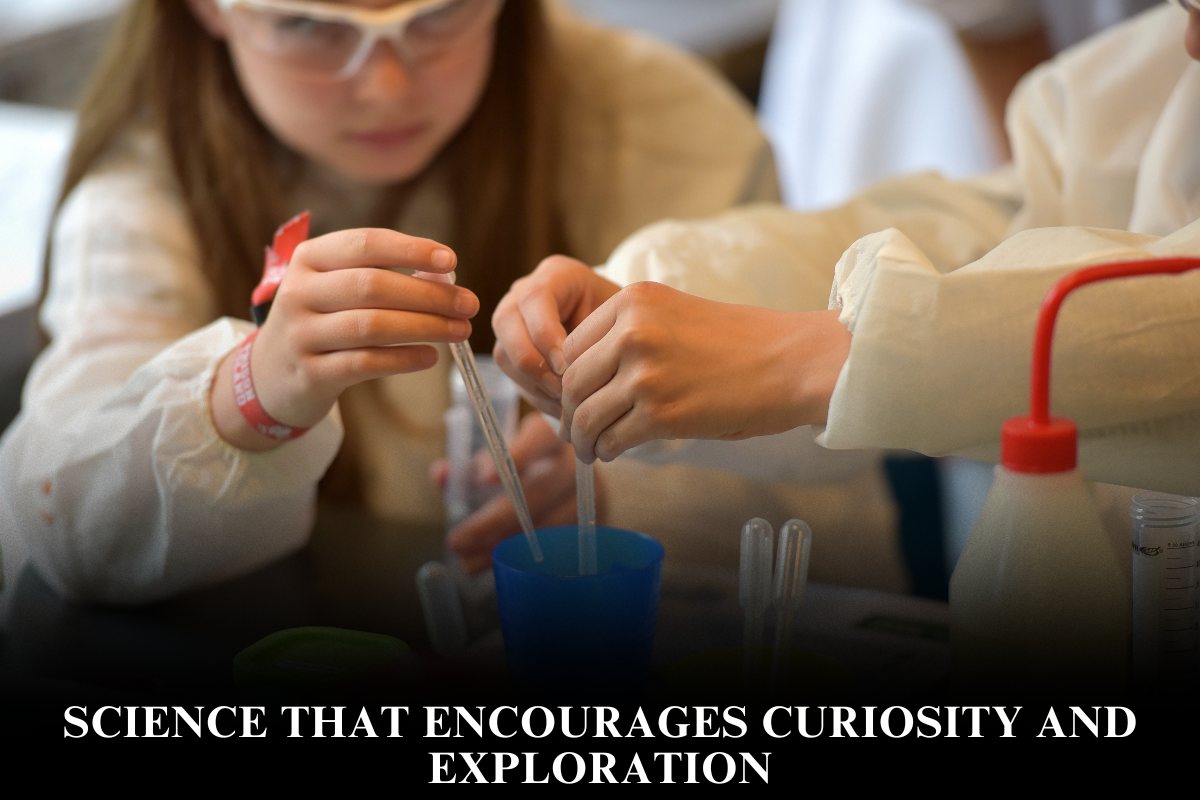
Hands-on learning, citizen science projects, and STEM mentorships foster both curiosity and confidence. Programs like NASA’s “Earth Observations” and NIH’s “All of Us” research invite students and citizens into scientific data collection and analysis, building trust through participation.
2. Promote Critical Thinking
Teaching how to question — not just what to memorize — develops analytical minds. Tools such as the CRAAP test (Currency, Relevance, Authority, Accuracy, Purpose) help learners distinguish between credible and dubious sources.
3. Empower Science Communication
Scientists and institutions must communicate findings clearly and accessibly, avoiding jargon and emphasizing transparency. During the pandemic, trusted communicators like Dr. Anthony Fauci modeled this by contextualizing uncertainty rather than overstating certainty.
4. Support Public Engagement
Local museums, science cafés, and community college workshops can demystify scientific processes. U.S. initiatives like the American Association for the Advancement of Science’s “Dialogue on Science, Ethics, and Religion” highlight how respectful dialogue strengthens understanding across values and belief systems.
5. Integrate Science into Civic Life
Encouraging citizens to link science to local issues — air quality, flood control, or food systems — makes learning relevant. City councils and school boards increasingly rely on data-informed decision-making; fostering public awareness ensures accountability and participation.
Science for the Everyday Citizen
Science awareness transforms the way people navigate choices that shape health, environment, and economy.
- In healthcare, it helps individuals interpret statistics, read nutrition labels, and assess treatment claims.
- In finance and technology, it informs understanding of AI, cybersecurity, and energy efficiency.
- In communities, it inspires engagement with climate adaptation and sustainable agriculture efforts.
One example is the expansion of U.S. citizen-science networks like SciStarter, where residents collect pollinator data or monitor local water quality. This not only broadens scientists’ reach but also empowers Americans to see science as participatory and democratic, not exclusive or elitist.
Ultimately, every policy — from renewable subsidies to public transit planning — depends on citizens capable of weighing evidence. Widespread science awareness means stronger collective foresight and resilience.
Frequently Asked Questions (FAQs)
Q. What’s the difference between science awareness and scientific literacy?
Scientific literacy relates to understanding basic principles and facts, while science awareness emphasizes applying them — interpreting research, detecting misinformation, and linking evidence to real-world choices.
Q. How can adults improve their science awareness outside school?
Explore reputable resources like NASA.gov, Science News, or university extension webinars. Join citizen science projects or local science clubs to see knowledge in action.
Q. Why is science communication so important today?
Because facts alone seldom change minds. Clear, empathetic explanation builds trust and bridges between experts and the public, combating misinformation and polarization.
Q. What role does social media play in science misinformation?
While it democratizes information, it can also amplify falsehoods rapidly. Users must verify sources, check authors’ credentials, and cross-reference major claims with peer-reviewed research.
Q. How does science awareness strengthen democracy?
It equips citizens to evaluate policy, vote based on evidence, and hold leaders accountable for data-supported decisions, ensuring that public discourse remains reasoned—not driven by fear or ideology.