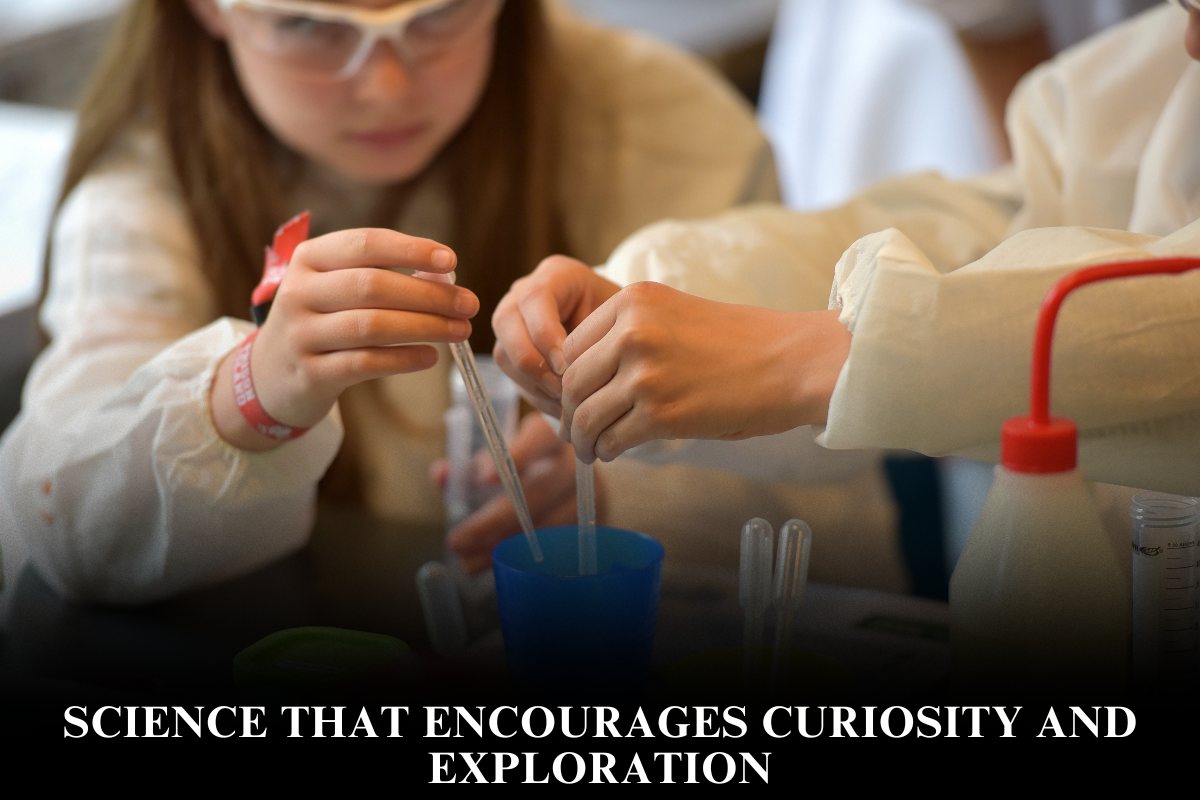
Hands-on science education, also referred to as experiential or practical science learning, has a profound impact on young learners by transforming abstract scientific concepts into tangible experiences.
It engages children’s senses and curiosity by enabling them to learn through doing, observation, and experimentation rather than passive absorption of information. This approach significantly enhances knowledge retention, comprehension, and enthusiasm for science.
Improved Understanding and Retention
Research shows that students participating in hands-on science activities understand scientific principles more deeply and retain information longer compared to traditional lecture-based methods.
When learners actively engage in experiments, they connect theoretical ideas with real-world applications, which strengthens memory and cognitive assimilation. This enhanced retention is critical for long-term academic success in science subjects.
Development of Critical Thinking and Problem-Solving Skills
Hands-on science education cultivates essential skills such as critical thinking and problem-solving. By designing experiments, making hypotheses, testing outcomes, and revising understandings based on evidence, young learners experience the scientific method firsthand.
This process nurtures analytical thinking, creativity, and a questioning attitude, which are vital skills not only in science but for everyday decision-making and lifelong learning.
Increased Motivation and Engagement
Experiential learning activities are inherently more engaging and motivating for young learners. The active involvement stimulates curiosity and generates a sense of achievement through discovery and experimentation.
This intrinsic motivation encourages sustained interest in science and encourages learners to pursue further STEM-related education and careers.
Social and Emotional Development
Hands-on science education often involves group work and collaboration, fostering social skills such as communication, teamwork, and empathy. Children learn to share ideas, listen actively, and work collectively towards common goals.
Moreover, hands-on activities build confidence and independence as children see tangible results from their efforts, reinforcing a positive self-image and resilience.
Building Real-World Connections
Young learners benefit from seeing how scientific concepts apply to everyday life. For example, experiments involving water properties, plant growth, or simple machines tie abstract ideas to familiar phenomena.
This contextual learning helps children understand the relevance of science to their personal and community lives and fosters a scientific temper from an early age.
Long-Term Academic and Career Benefits
Students trained through hands-on learning are better prepared for advanced scientific study and technical careers. They develop a strong foundation of practical skills, analytical mindset, and problem-solving capabilities essential for STEM fields. Furthermore, these experiences promote curiosity and a love for science that extend beyond the classroom into lifelong intellectual engagement.
FAQs
What is hands-on science education?
It is an educational approach where students actively participate in experiments and practical activities to learn scientific concepts through direct experience.
How does hands-on learning improve understanding?
By engaging senses and allowing learners to experiment, it connects theory with tangible examples, improving comprehension and memory retention.
Why does hands-on science increase motivation?
Active participation and discovery create excitement and curiosity, which motivate children to learn more and sustain interest in science.