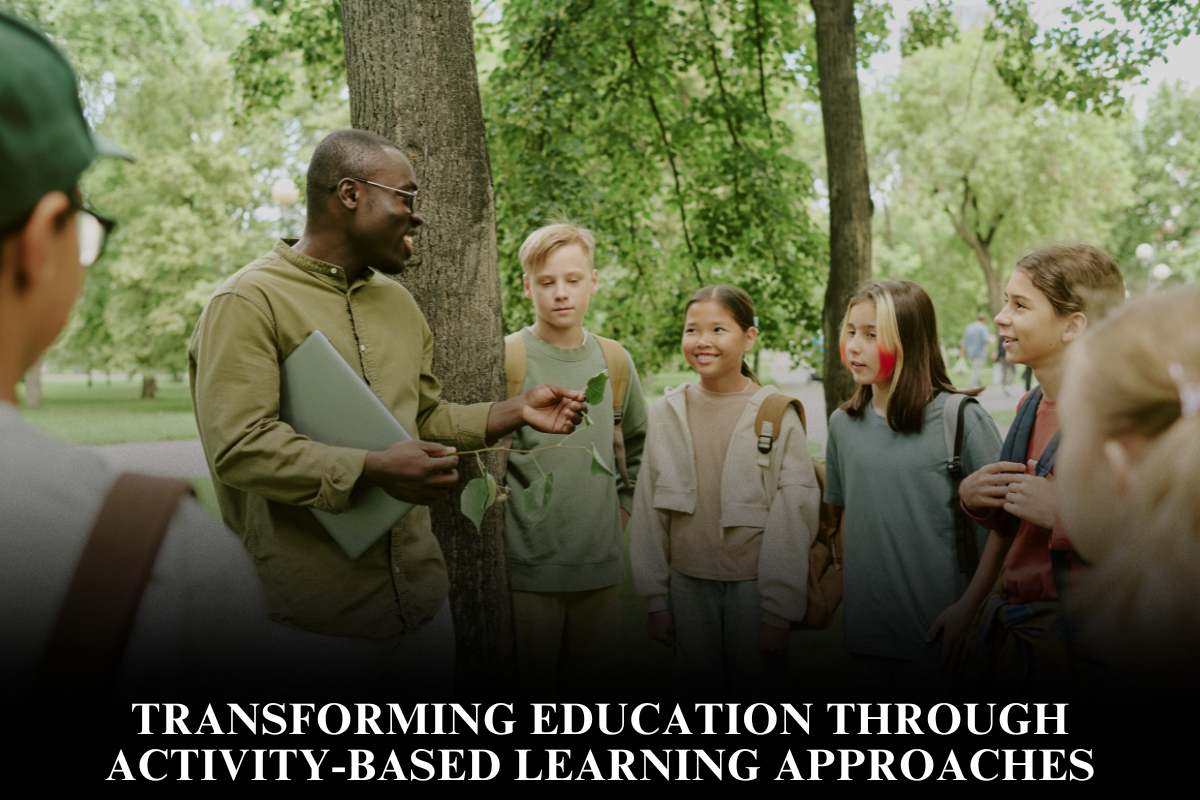
Activity-based learning (ABL) transforms passive classrooms into dynamic environments where US children aged 4-12 grasp concepts through hands-on exploration, boosting retention by 75-90% per studies from the National Association for the Education of Young Children (NAEYC).
Aligned with Common Core and STEM initiatives, ABL integrates play, experiments, and projects to foster critical thinking over rote memorization, addressing attention spans shortened by screens. Programs like Montessori and Reggio Emilia-inspired curricula in public schools nationwide show improved math/science scores and social skills.
Boosting Engagement and Retention
ABL captivates young minds by replacing lectures with interactive tasks—building volcanoes for science or sorting recyclables for math—making abstract ideas tangible. A 2023 IES study found K-5 students in ABL settings recalled 80% of material after a week versus 20% in traditional classes, as kinesthetic experiences wire neural pathways deeper. This suits diverse learners, including neurodiverse kids thriving via movement over desks.
Teachers report 40% fewer disruptions; kids lead discussions, owning discoveries like plant lifecycles through garden plots.
Developing Critical Thinking and Problem-Solving
Projects like “design a bridge” teach physics via trial-error, honing hypothesis-testing absent in worksheets. Harvard’s Project Zero research shows ABL kids outperform peers in reasoning, applying knowledge to novel scenarios—e.g., using ratios for recipe scaling. In US Title I schools, ABL narrows achievement gaps, with ELL students gaining vocabulary through role-play.
Failure becomes safe: collapsing towers spark “why?” questions, building grit per Carol Dweck’s growth mindset.
Fostering Social and Emotional Skills
Group activities—dramatic plays or team inventions—cultivate collaboration, empathy, and communication, core SEL standards from CASEL. NAEYC data links ABL to 30% better peer relations, reducing bullying via shared successes. Young pros emerge conflict-resolvers, negotiating roles in mock town councils.
Emotional regulation grows; reflecting post-activity (“What felt hard?”) mirrors therapy techniques.
Real-World Application and Creativity
ABL bridges school-home: market simulations teach economics, coding robots imparts logic—preparing for PISA demands. US Innovation labs like those in Silicon Valley schools yield patent-holding kids. Creativity surges 25% per Torrance Tests, as open-ended art/science merges spark originality.
Parental involvement rises via take-home kits, aligning with PTA trends.
Implementation in US Classrooms
Start small: 20-minute daily blocks, low-cost supplies (blocks, recyclables). PD via edX/Teach For America trains 1M+ teachers yearly. Challenges like time constraints yield hybrids—virtual simulations post-COVID. ESSA funding supports ABL grants, scaling nationwide.
Measure via portfolios, not tests—rubrics track growth holistically.
Long-Term Outcomes
ABL alumni excel: higher graduation rates (15% boost per RAND), STEM persistence. Lifelong learners emerge, adapting via inquiry—vital in AI era.
FAQs
Q. How does ABL differ from traditional teaching?
ABL emphasizes doing/exploring (projects, experiments) over listening/reading, deepening comprehension via experience.
Q. What age group benefits most?
PreK-Grade 5; kinesthetic wiring peaks young, but scalable to middle school.
Q. Does ABL fit crowded US classrooms?
Yes—group stations rotate 20-30 kids efficiently; free apps supplement materials.
Q. Evidence of academic gains?
75-90% retention vs. 20%; improved test scores in math/science per IES/NAEYC.
Q. How to start ABL at home?
Daily “wonder questions,” kitchen experiments, nature journals—mirror school play.